
Oct 13, 2026
How to Build a Mixed Private Label Packaging RFQ for Bags, Boxes and Wrapping Paper
Build a clearer RFQ for paper gift bags, gift paper boxes and gift wrapping paper by aligning MOQ splits, logo printing details, delivery windows and sample approvals.
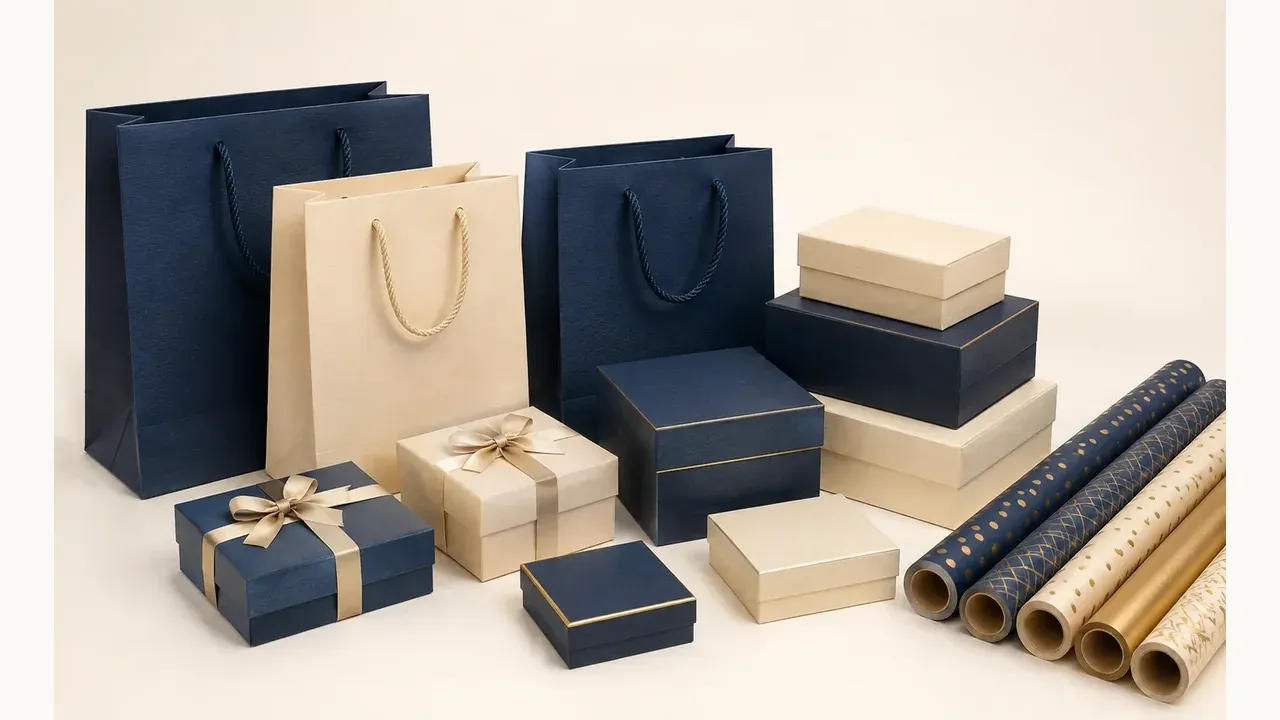
Many buyers launch a private label packaging program with more than one packaging item. A retailer may need paper gift bags for checkout, gift paper boxes for premium sets and gift wrapping paper for seasonal presentation. The sourcing risk is that each item is quoted separately, with different assumptions, timelines and material standards.
A mixed RFQ works better when it is organized as one packaging program with shared commercial logic. That gives the supplier enough context to recommend MOQ splits, coordinate sampling and plan delivery without repeated revisions.
Begin with the program structure, not isolated SKUs
Before requesting quotations, list the full packaging family. Show which items are mandatory for launch, which are optional and which can follow in a second phase. This helps the supplier understand whether the order should be optimized around one hero item or across the total private label packaging program.
If bags, boxes and wrapping paper will reach the same stores at the same time, the RFQ should say so clearly. Coordinated launches often justify different planning decisions than independent item-by-item purchases.
Separate fixed requirements from adjustable specifications
The best RFQs identify what cannot change and what can still be optimized. The brand logo, color direction, launch date and basic packaging function may be fixed. The exact board thickness, bag handle type, wrapping paper roll length or surface-finish combination may still be open to supplier advice.
This distinction is important because it allows the factory to solve the commercial problem rather than only price the first draft. A supplier can recommend an easier MOQ path when it knows which inputs are flexible.
Keep logo printing instructions consistent across all items
Logo printing should be described in one shared section of the RFQ, then applied to each product type. Use the same master brand files, Pantone references, size tolerances and finish terminology across paper gift bags, gift boxes and wrapping paper. That reduces approval errors and avoids cross-product color drift caused by incomplete instructions.
If different items use different print methods, say so directly. For example, the bag may use one-color offset printing, the box may use foil stamping and the wrapping paper may use repeated brand motifs. Consistent source files still help, even when the production methods vary.
Show MOQ splits at both item level and total program level
Factories need to see how the order is divided. A packaging buyer should show the quantity for each bag size, each box size and each wrapping paper design, then also state the total program volume. Shared material sourcing or printing setups may support a better commercial proposal when the supplier sees the whole picture.
Low MOQ pressure often comes from too many small variants, not from the total demand. If some sizes or designs are tentative, label them as optional instead of presenting every SKU as equally firm.
Align sample approvals across the full packaging set
Sampling becomes inefficient when every item follows a different approval path. A better approach is to define which approvals are needed for structure, color, finish and final pre-production confirmation, then align those steps across the full program where possible.
For example, a buyer can approve brand color references and logo placement logic once, then review product-specific structural samples separately. This reduces repeated discussions and helps all three packaging categories move through the factory at a similar pace.
Build one delivery calendar with item-specific checkpoints
A mixed packaging order needs one master calendar and several product-specific milestones. Gift paper boxes may need more structural confirmation, paper gift bags may need carton packing checks and wrapping paper may depend on repeat approval or roll-format confirmation. Those differences should sit inside one delivery plan rather than three disconnected schedules.
Ask suppliers to identify which item is likely to control the program timing. That answer is useful for launch planning because it shows where schedule buffer should be added first.
Ask for coordinated packing and shipment assumptions
If the buyer expects one consolidated shipment, the RFQ should mention that requirement. Export cartons, pallet planning, labels and warehouse receiving needs should be considered across all items. A packaging set with shared delivery windows is easier to manage when the supplier plans the full freight profile early.
If split shipments are acceptable, state which items may ship first. That can help protect the launch date without forcing unnecessary urgency onto every SKU.
How to compare supplier quotations
A lower quote is only useful when the assumptions are visible. Buyers should compare material grade, print process, surface finish, packing method, MOQ split, sample scope and lead-time starting point. When those fields differ, the prices are not truly comparable.
Request one preferred quotation and one value-engineered alternative when budget is still under discussion. The alternative should preserve the brand direction while simplifying the least important variables.
Quotation Checklist
• Full packaging program list covering bags, boxes and wrapping paper
• Fixed brand requirements versus adjustable technical specifications
• Shared logo files, color references and print-position guidance
• Quantity split by SKU and total private label packaging volume
• Material and finish requirements for each item type
• Sample types needed, approval sequence and target sign-off date
• Delivery calendar, shipment window and whether consolidation is required
• Export carton, labeling and warehouse handling requirements
• Destination market, trade term and whether future replenishment is expected