
Oct 16, 2026
Gift Wrapping Paper Curl Control, Roll Direction and Sheet Converting Guide
A procurement guide to specifying curl control, roll direction, sheet conversion and sample checks for custom gift wrapping paper.
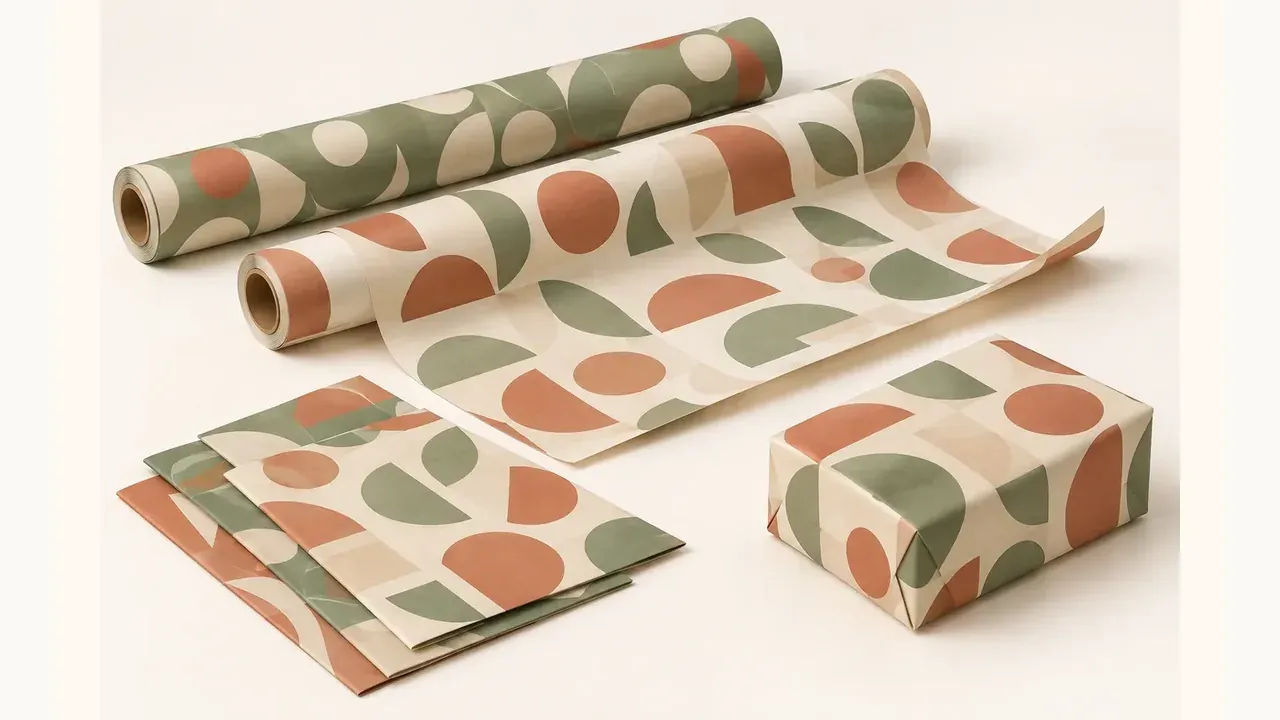
Custom gift wrapping paper can have a crisp print and still create trouble at the packing table. A sheet that curls aggressively, a roll that feeds the wrong way, or a converted edge that lifts after folding slows down wrapping and makes finished gift sets look inconsistent. These are converting questions, not just artwork questions.
This guide helps buyers write a usable request for quotation and approve a sample on the way it will actually be used. It does not assume that one paper, coating or curl level suits every climate, format or product.
Start with the wrapping method and product shape
State whether the paper will be supplied as retail rolls, counter rolls, flat sheets, pre-cut sheets or a mix of formats. Include the approximate item being wrapped: a shallow box, a tall bottle carton, an apparel fold or an irregular gift. The folds, tape points and time the paper spends around the product all affect what counts as acceptable handling.
Also explain who is doing the wrapping. A brand using a semi-automatic cutter may need a different roll orientation and core specification from a boutique team tearing sheets by hand. If paper is paired with tissue, ribbons or seals, note whether those materials are applied immediately or after the wrapped set rests. This gives the supplier a reason to assess the complete pack-out instead of treating curl as an isolated sheet property.
Specify the substrate and surface system together
Paper base, basis weight, coating, ink coverage and any lamination or varnish work together. A dense dark artwork can behave differently from a light pattern on the same nominal paper. The same is true when one side is printed or coated and the other is left more absorbent.
Ask the supplier to identify the proposed substrate, print side, reverse-side treatment and surface finish in the quotation. If the brand needs a particular tactile feel, request a physical swatch or construction sample rather than relying on screen proofs. Avoid approving a generic stock sample as evidence that a fully printed production sheet will lie the same way.
Define roll direction before artwork is released
Roll direction tells the factory which edge leads when the paper is unwound. It affects how a repeating pattern, a logo, a stripe and a one-way design appear on the finished gift. It can also influence workflow where a dispenser, cutter or wrapping station has a fixed feed direction.
Provide an artwork file with a marked unwind direction where it matters. For a directional logo or pattern, ask for a small mock-up showing a wrapped box from the customer-facing side. Confirm whether the design must read upright on the long edge, short edge or both. If the paper will be converted into flat sheets, identify the intended grain or feed orientation in relation to the final sheet dimensions.
Review curl on a representative converted sample
The most useful sample is the finished roll or sheet in the selected construction, printed with representative ink coverage and stored in conditions close to the intended packing environment. Unwind a practical length or lay out several sheets. Let the material rest, then fold it around a representative product using the planned tape or seal.
Record what the buyer sees: edge lift, reverse curl, spring-back at the corners, scuffing at folds, difficulty holding a crease, or distortion of a repeated graphic. Agree in advance whether the check is only visual or whether a packing operator must complete a trial wrap. A named observation is more useful than a request for “flat paper.”
Check sheet size, squareness and converted edges
For flat wrapping paper, dimensions alone are not enough. Buyers should confirm the finished sheet size, permitted trim arrangement, whether the cut must be square, and whether a deckle or folded edge is acceptable. A narrow size tolerance may be important for a gift-box program where the paper is cut to a set pattern, but it may be unnecessary for an informal retail wrap.
Inspect several sheets from the sample pack rather than only the top sheet. Look for clean cut edges, no loose fibres, no blocking between printed faces and no damaged corners caused by packing. If sheets are supplied folded, specify fold orientation and whether fold lines may be visible after the paper is opened.
Plan carton packing and storage before the order is placed
Moisture, compression and temperature changes during transit can change how paper behaves at the packing bench. Ask how rolls are protected from edge damage and how flat sheets are packed against corner crush or bending. Include destination, expected warehouse conditions and whether cartons may be opened and reclosed repeatedly during a seasonal campaign.
The order should also state how many rolls or sheet packs go in a carton, the carton marking required for pattern and direction, and whether lot traceability is needed. These points help the receiving team keep one design and orientation together rather than discovering a mismatch midway through a wrapping program.
Set boundaries before changing paper or finish
Do not assume that a material or finish change is interchangeable because the artwork file is unchanged. A new mill lot, paper grade, coating, ink coverage or conversion format may alter handling and color appearance. For repeat orders, identify which approved sample is the reference and require written review before a construction substitute is made.
If a launch date leaves no time for a full handling sample, make that a visible risk decision. The buyer can choose a proven construction, reduce the number of variables or accept a limited trial quantity. Hiding the dependency inside a vague “same as last time” note makes later acceptance difficult.
Quotation checklist
• [ ] Finished format: roll, counter roll, flat sheet, pre-cut sheet or mixed supply
• [ ] Paper substrate, print side, reverse-side treatment and selected surface finish
• [ ] Finished roll width, roll length/core requirement or sheet width and length
• [ ] Artwork repeat, logo orientation and marked unwind/feed direction
• [ ] Representative wrapped product and intended wrapping workflow
• [ ] Sample review for curl, edge lift, fold hold, print scuffing and graphic orientation
• [ ] Sheet squareness, edge-quality and folded-pack requirements where applicable
• [ ] Carton packing, roll-edge/corner protection, storage conditions and carton marking
• [ ] Approved master sample and written change-control requirement for repeat orders
• [ ] MOQ, production schedule, delivery destination and inspection requirements